

Buy Alkaline Water: How to Choose the Right Bottled Option for Daily Use
If you're trying to buy alkaline water for everyday drinking, the aisle can feel like a wall of buzzwords. Here's a simple decision filter that separates "nice-to-have" from "mostly marketing."
If you're trying to buy alkaline water for everyday drinking, the aisle can feel like a wall of buzzwords: alkaline, ionized, electrolytes, performance, hydration. The good news is you don't need a chemistry degree to choose a solid alkaline water bottle for daily use. You just need a simple decision filter that separates "nice-to-have" from "mostly marketing."
This guide breaks it down in plain English, with a little brand-strategy thinking, since bottled water isn't only about hydration. It's also about convenience, trust, and the identity people want their everyday products to signal.
Start with the Boring Truth: Hydration Matters More Than pH
Most people feel better when they consistently drink enough fluids. General guidelines often cited for total daily fluid intake are around 3.7 liters (about 15.5 cups) for men and 2.7 liters (about 11.5 cups) for women, including fluids from food and all beverages.
So yes: picking a "better" water can help if it makes you drink more consistently. But it helps to understand what alkaline water can and can't reasonably do.
Mayo Clinic notes that alkaline water has a higher pH than regular water, and while some people claim it can "neutralize acid" in the body, more research is needed to prove many of the big health claims.
Choose alkaline water if you like it, it's convenient, and you'll actually drink it. Just don't treat pH as a magic stat.
Buy Alkaline Water Like a Strategist, Not Like a Label-Reader
Here's the mental shift: you're not only choosing water. You're choosing a daily habit product. Winning bottled-water brands don't compete on formulation alone. They win on:
- Consistency: easy to grab, easy to keep around
- Trust: clear labeling, believable claims
- Taste + mouthfeel: yes, it's real
- Identity: "this fits who I am" (fitness, focus, clean living, etc.)
That's why "ionized performance water" positioning works. It gives people a story to attach to a simple habit.
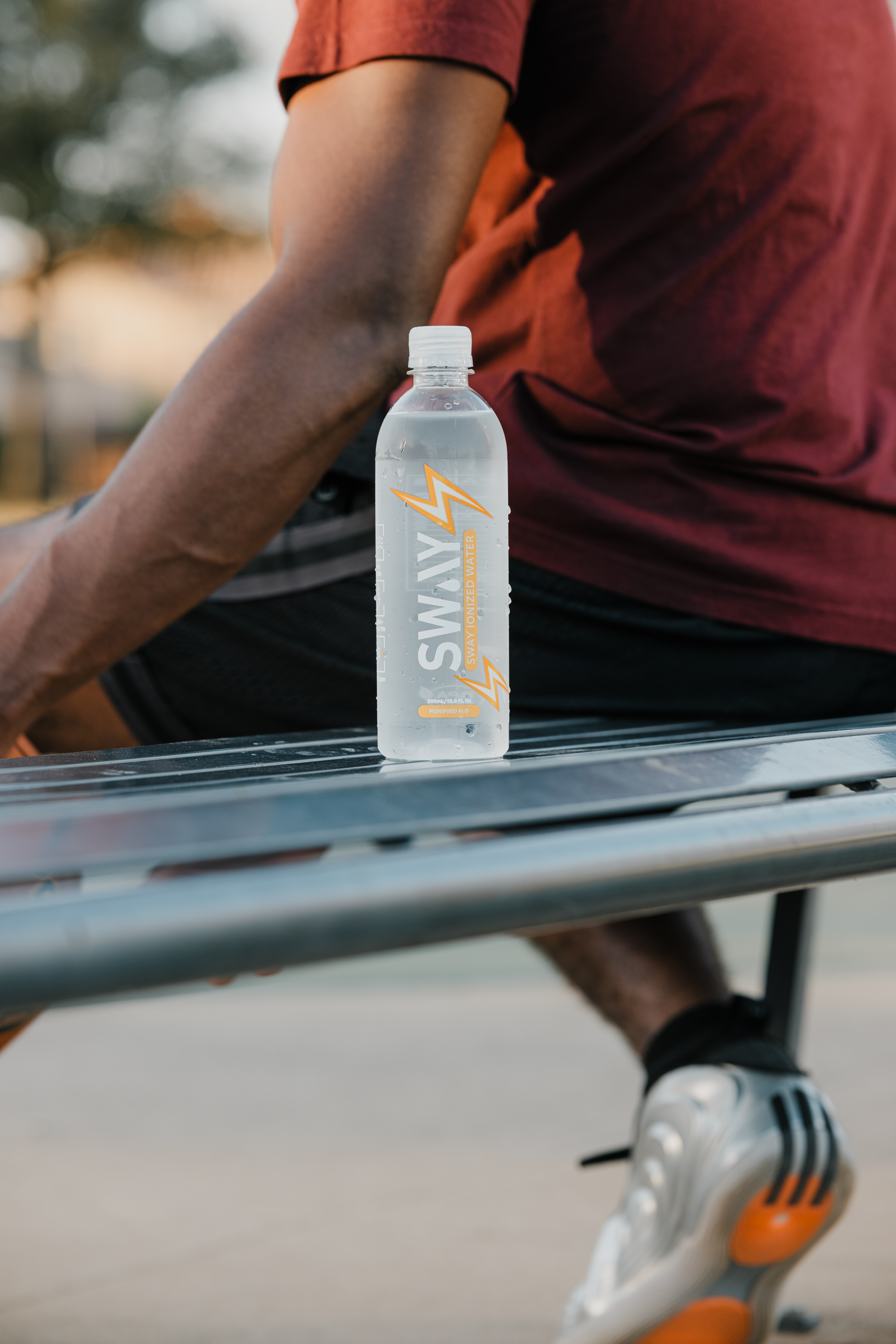
SWAY H2O is positioned as a premium bottled water marketed as ionized performance water: purified water, enhanced with minerals, and adjusted to a higher pH for a functional hydration vibe.
What "Alkaline" and "Ionized" Usually Mean on a Bottle
Alkaline (pH)
- pH is a measure of acidity/alkalinity. "Alkaline water" is typically above 7.
- Bottles may list a pH of 8, 9, or higher.
- What it tells you: the product is marketed as higher pH than typical water.
- What it doesn't prove: that it changes your body's overall pH or delivers dramatic health outcomes.
Ionized
"Ionized" generally means the water has been processed (often through electrolysis) to separate acidic and alkaline streams, producing water with a higher pH and different mineral balance. In practice, it's mostly a process claim paired with a positioning claim — performance, recovery, focus.
The Label Checklist: How to Pick the Right Bottled Option
1. Check the Source and Processing
Look for clarity on where the water comes from and how it's treated:
- Purified / filtered / reverse osmosis
- Mineral-enhanced (added minerals)
- Spring source (naturally occurring minerals)
There isn't one "best" source for everyone. The point is transparency.
2. Look at Minerals and Electrolytes (Especially If You're Active)
For daily, normal life — desk work, errands, school, casual workouts — plain water is usually enough. But if you sweat hard or do long sessions, electrolytes can matter. The American College of Sports Medicine's guidance on exercise hydration emphasizes replacing fluids and, when needed, electrolytes to support performance and recovery.
A practical tip: if you regularly do intense workouts or sweat heavily, sodium losses can add up. ACSM notes heavy sweaters might lose hundreds of mg of sodium per hour during vigorous exercise.
- For everyday use: don't overthink "electrolytes."
- For hard training days, a mineral-enhanced water may feel better, or you can pair regular water with food that contains sodium.
3. Don't Chase the Highest pH Number
A higher pH is not automatically "better." If the product tastes weird to you, you won't drink it consistently — and consistency beats "perfect specs" every time.
4. Packaging Matters More Than People Admit
If it's going in your car, bag, gym locker, or work desk:
- Choose a bottle that won't leak
- Choose a size you'll actually finish
- Choose something you're not embarrassed to carry
That "premium bottled water" feel isn't just ego. It's a habit design.
5. Watch for Claim Overload
If a bottle implies it does everything — energy, detox, curing, fat-burning — be skeptical. A clean, believable claim is usually a better sign than a long list of promises. Mayo Clinic's stance is basically: interesting concept, but big health claims need more proof.
Everyday Decision Guide: Match the Bottle to Your Routine
If You're Buying for All-Day Hydration
- A taste you like
- A bottle size you'll finish 1–3 times per day
- A brand with clear sourcing and consistent labeling
If You're Buying for Workouts
- A bottle that's easy to drink fast between sets
- Mineral-enhanced or electrolyte-containing options if you sweat a lot
- Something you'll reliably keep stocked
If You're Buying to Replace Sugary Drinks
This is where "functional water drink" positioning helps. A cold bottle with a performance narrative can be a solid no-sugar alternative — without pretending it's an energy drink.
How to Tell If It's Working (Without Overthinking)
A simple self-check:
- Your urine is usually light yellow (not always clear).
- You're not getting frequent headaches from being under-hydrated.
- You don't feel wiped out after normal activity.
- You're not regularly dealing with obvious dehydration signs like dark urine, dizziness, or unusual fatigue.
If you have a medical condition that affects fluid or mineral balance, check with a clinician before making "high-mineral" beverages a daily default.
FAQ
Is alkaline water good for you?
For most people, it's fine as a hydration choice. Just be cautious about big health claims — major outlets note more research is needed.
Does water pH matter for hydration?
Hydration is mostly about total fluid intake and consistency. pH is more of a product attribute than a proven hydration "upgrade" for the average person.
Electrolyte water vs sports drinks: which is better?
For most day-to-day situations, you don't need sports drinks. For long or intense workouts — especially heavy sweating — electrolytes can help replace losses.
What's a simple way to pick the best water for hydration?
Pick the one you'll drink consistently, that tastes good, and comes from a brand with clear sourcing and straightforward labeling. Daily habits beat perfect specs.
Choose the Bottle You'll Actually Use (and Keep It Simple)
Buying alkaline water doesn't have to be complicated. Treat it like choosing any daily staple: prioritize consistency, trust, and fit with your routine. If a premium option like SWAY H2O makes you reach for water more often, that's a win on its own.
Daily habits beat perfect specs.
If you want to explore ionized performance water positioned for daily routines and active days, check out www.swayh2o.com.